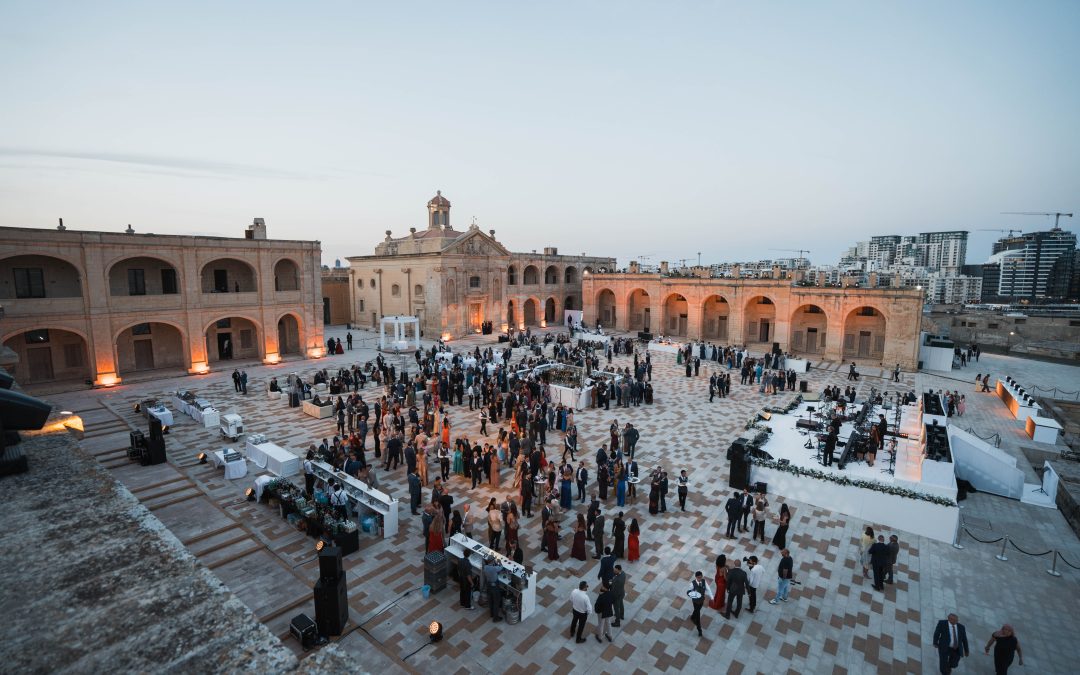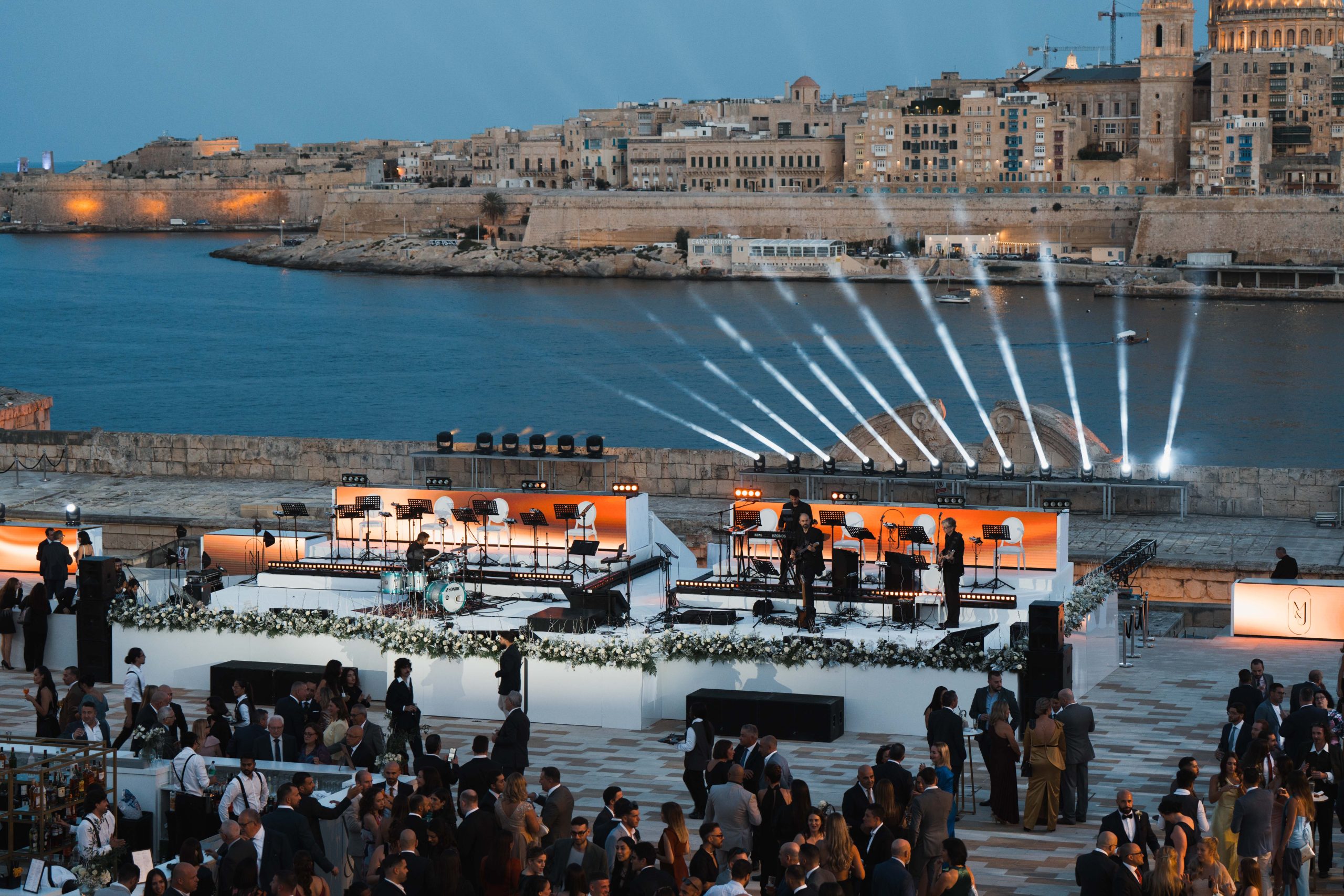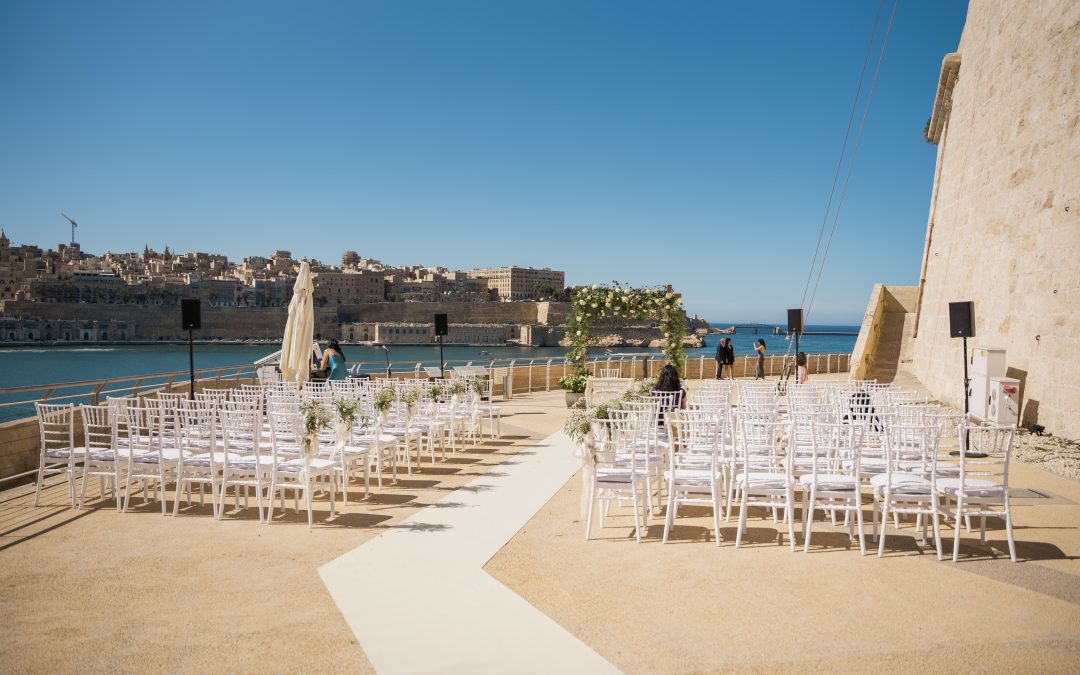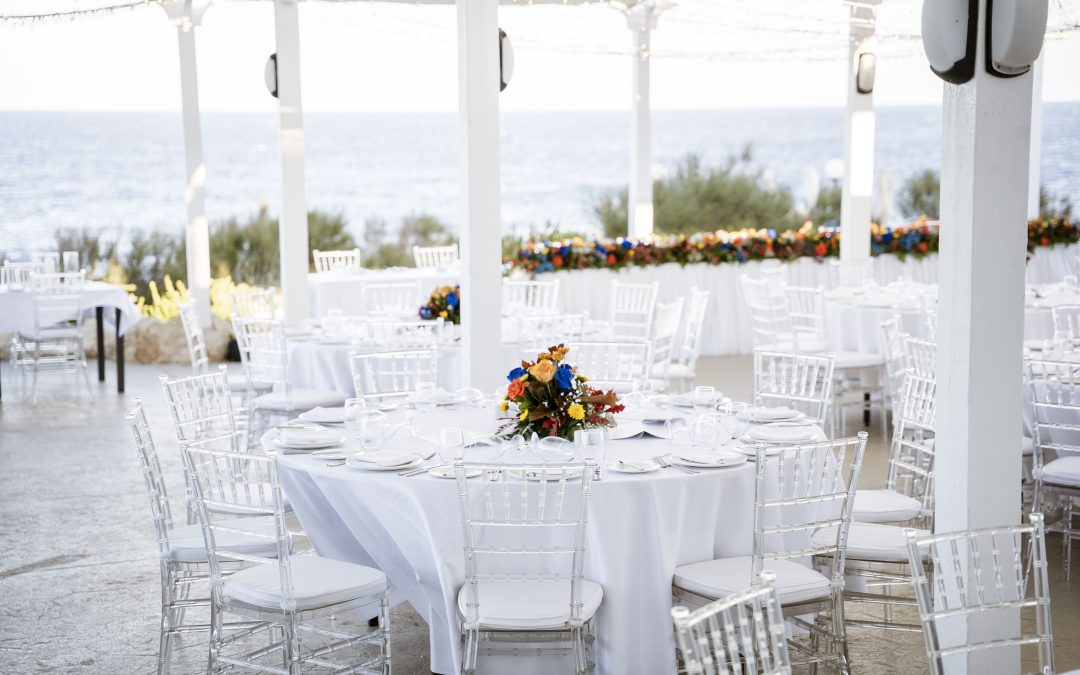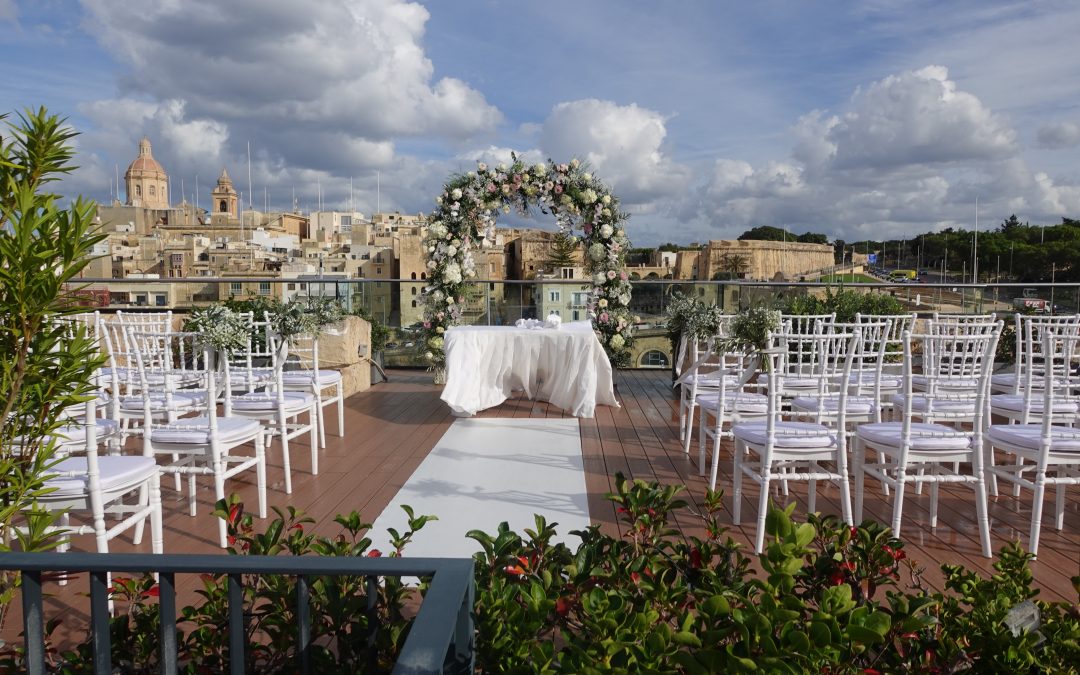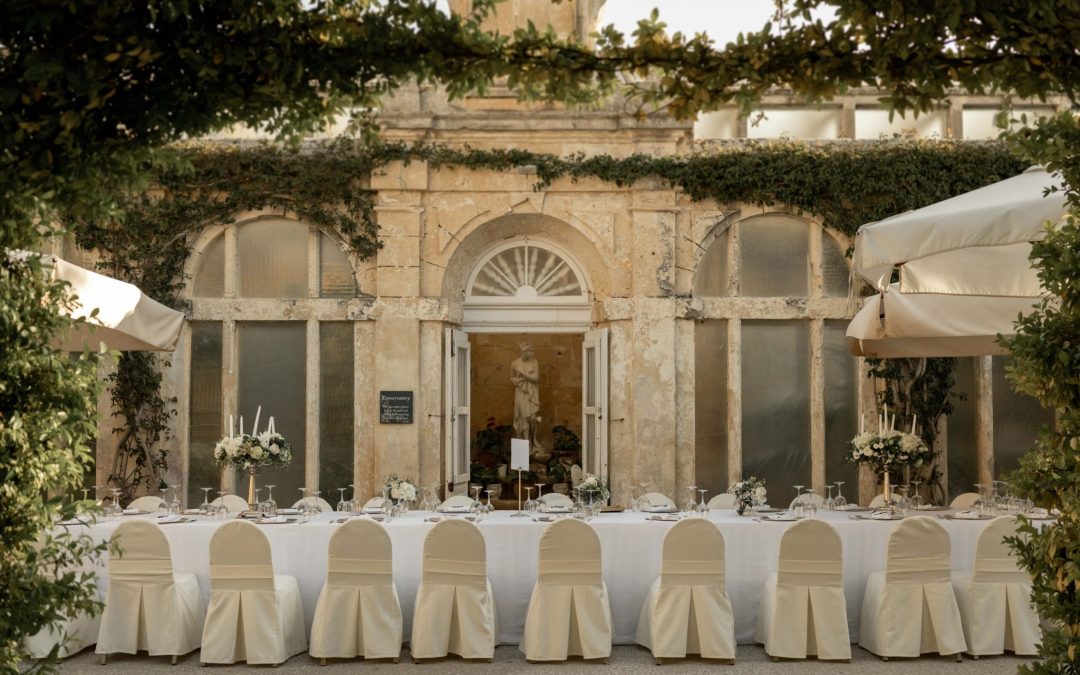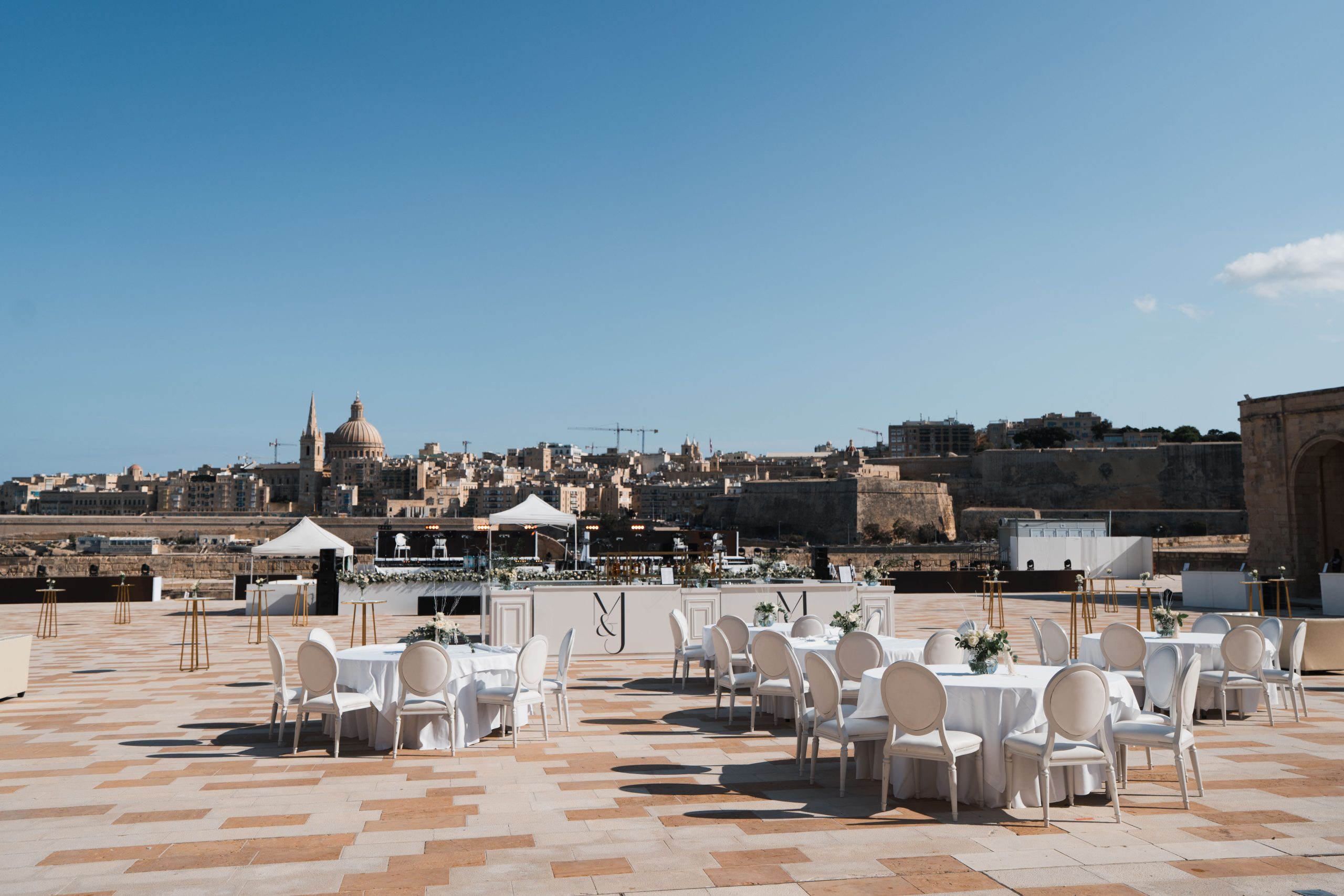
Planning a wedding abroad requires more than choosing a beautiful venue. It involves aligning legal requirements, supplier coordination, and guest logistics in a structured way.
Malta has become one of the Mediterranean’s established destination wedding locations thanks to its English-speaking environment, centralised marriage registration system, and compact geography that simplifies logistics.
If you are planning your wedding in Malta from abroad, here is a practical step-by-step guide.
Step 1: Define Your Guest Count, Ceremony Type and Budget
Before booking anything, clarify:
- Estimated number of guests
- Civil or religious ceremony
- Preferred time of year
- Budget range
Guest count directly impacts venue selection, catering structure, accommodation planning and transport requirements.
Step 2: Understand the Legal Process in Malta
Marriage applications in Malta are handled by the Marriage Registry Section within Identità (Public Registry).
Couples must submit a request for the publication of marriage banns within the official time window set by the Registry. This request is typically made between three months and six weeks before the wedding date. Submitting later than the official deadline may result in rejection.
Foreign couples are generally required to provide:
- Full birth certificates
- Certificate of free status (or certificate of no impediment)
- Valid passport copies
- Identification details of two witnesses
If either party has been previously married, additional documentation such as a divorce decree or death certificate will be required.
Documents issued outside Malta may require apostille or legalisation depending on the issuing country. Documents not in English or Maltese may require certified translation.
Because requirements vary depending on nationality and personal circumstances, couples should confirm details directly with the Marriage Registry before preparing documentation.
Step 3: Create a Realistic Planning Timeline
A safe planning window for a destination wedding in Malta is 9–12 months.
A typical sequence:
12 months before – Secure a planner
10–12 months – Book your venue
8–10 months – Confirm key suppliers (photographer, catering, etc.)
6–8 months – Finalise styling and production
At least 3 months before – Begin legal documentation process
No later than 6 weeks before – Complete banns submission
1–2 weeks before – Final coordination review
Legal deadlines should always take priority.
Step 4: Create a Wedding Website for Guest Communication
For destination weddings, clear communication is essential.
Best practice is to create a dedicated wedding website that includes:
- Full event schedule
- Hotel recommendations (at different price points)
- Airport transfer and transport information
- Local travel guidance
- Contact details for key questions
Providing all logistical information in one place significantly reduces guest uncertainty and improves the overall experience.
Step 5: Organise Guest Logistics
Malta’s compact layout simplifies transport planning, but clarity is still important.
Recommendations:
- Share accommodation options early
- Provide clear transfer instructions
- Send a structured itinerary at least 6–8 weeks in advance
- Consider organising a welcome drink the day before the wedding
A pre-wedding welcome event allows guests to connect and helps create a relaxed atmosphere before the main celebration.
Step 6: Plan Your Budget Carefully
A destination wedding budget in Malta typically includes:
- Venue hire
- Catering and bar service
- Wedding planner fee
- Photography and videography
- Floral and décor
- Lighting and sound
- Legal documentation fees
- Guest transportation
Foreign couples should also consider:
- Pre-wedding visit travel costs
- Translation or legalisation fees
- Accommodation deposits
Clarity in budget allocation prevents last-minute structural changes.
Step 7: Structure the Wedding Week
A common structure for destination weddings:
Day 1 – Guest arrivals
Day 2 – Welcome drinks
Day 3 – Wedding day
Day 4 – Departure or optional brunch
Spacing events improves flow and reduces pressure on the wedding day itself.
Planning a destination wedding requires coordination across legal, logistical, and experiential elements. When structured properly, Malta offers efficiency, architectural diversity, and a clear regulatory framework.
If you are planning your wedding in Malta from abroad and need structured support from start to finish, MYWeddingPlanner provides full-service destination wedding planning.
Contact: [email protected]